


Welcome to The Hot Cut—where pop culture gets sliced, scandal gets spiced, and secrets get exposed.
I’m Lisa T., and this is where satire meets scar tissue.
You didn’t hear it from me… but let’s dive in.

New here? Start here → Previously on Lisa Writes Now
Catch up fast with a curated guide to the full series.
There are certain phrases Americans are taught to repeat almost automatically.
“Remember the Alamo.”
“Remember the Maine.”
“Remember Pearl Harbor.”
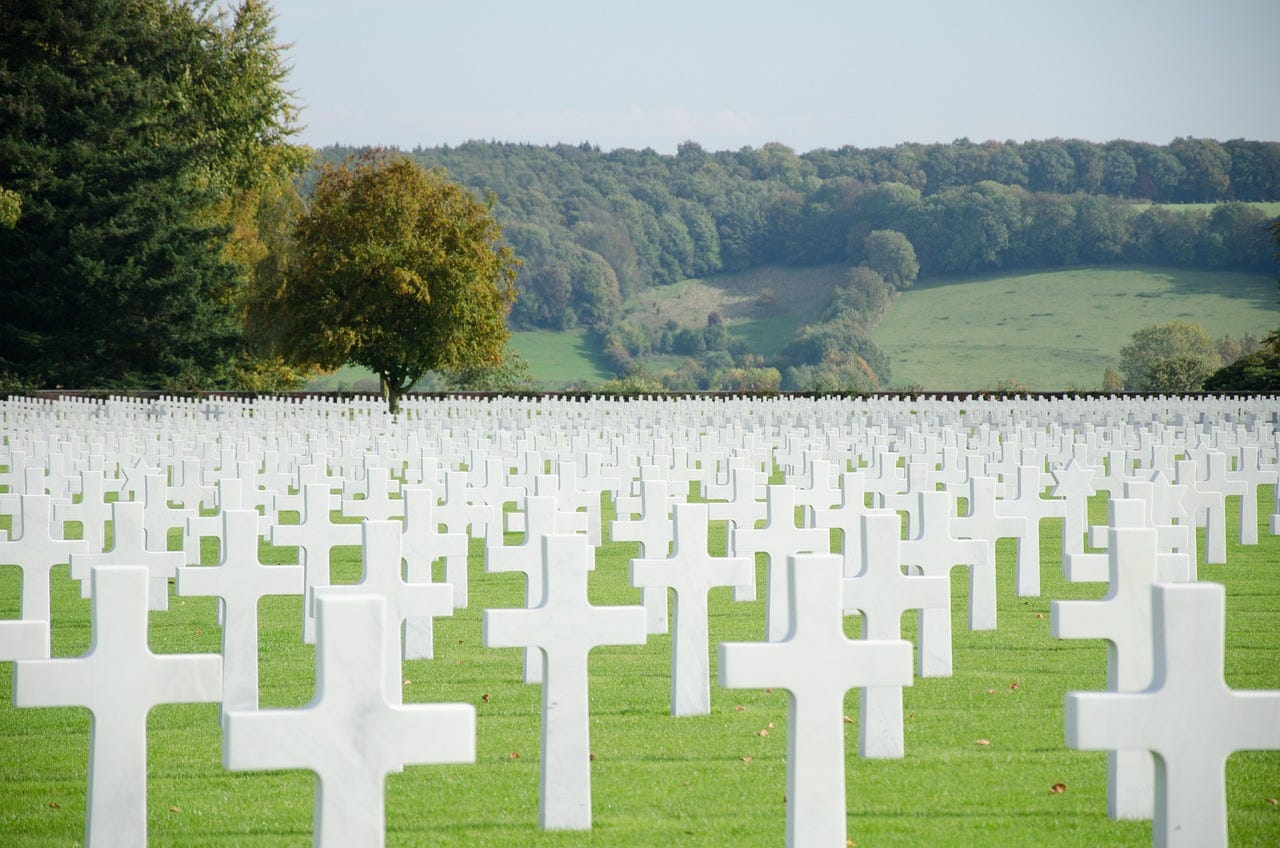
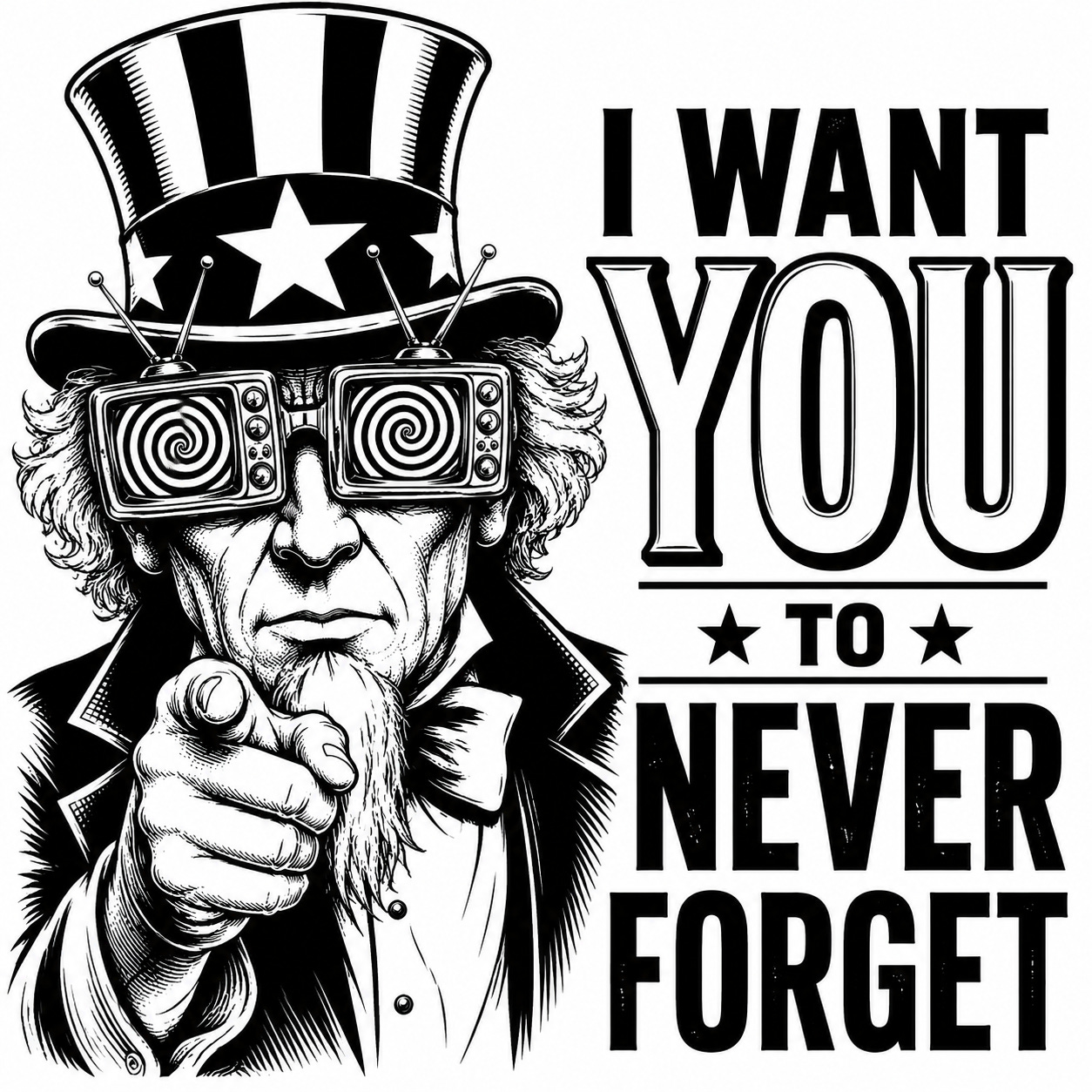
“Never Forget.”
They arrive after moments of shock. Moments of grief. Moments when the country is told it has crossed some invisible threshold and can never go back to the way things were before.
But over time, something strange begins to emerge.
The phrases themselves begin to sound familiar.
Listen to the audio podcast episode.
Not just emotionally familiar. Structurally familiar.
Like Super Bowl commercial slogan familiar.
Because America does not merely remember tragedies. It ritualizes them.
And once you notice the pattern, you start hearing the slogan before the story even ends.
Remember The Alamo
The modern American memory ritual arguably begins in Texas.
In 1836, after Mexican forces overwhelmed the Alamo mission and killed its defenders, the phrase “Remember the Alamo!” became a rallying cry for Texan troops.
The slogan simplified a complicated geopolitical conflict into something emotionally immediate:
Martyrdom. Sacrifice. Revenge.
The details mattered less than the feeling.
The Alamo became less a military event than a symbolic wound.
And that wound became useful.
The slogan transformed grief into fuel. It compressed history into instruction.
It redirected the energy of a trauma response to be used for something else.
Remember what they did to us.
Remember Goliad
Weeks later came another slogan: “Remember Goliad!”
After the execution of Texan prisoners by Mexican troops, the emotional machinery intensified.
This is the rhythm America would return to again and again:
Step 1: Shocking event.
Step 2: Simplified moral framing.
Step 3: Emotional repetition.
Step 4: Unified national response.
The slogan quickly, cleanly converts memory into momentum.
Remember Fort Pillow
During the Civil War, the pattern evolved further.
After news broke that Confederate troops had massacred surrendering Black Union soldiers at Fort Pillow in 1864, “Remember Fort Pillow!” spread through Union ranks—especially among Black troops.
Again: a traumatic event became a compressed emotional command.
Not analysis. Not nuance. Not investigating the details of the tragedy.
A slogan.
Because slogans travel faster than complexity. And they’re much easier to commit to memory.
Remember The Maine
Then came the moment that perfected the formula:
1898. The USS Maine explodes in Havana Harbor.
Before investigators even knew what had happened, newspapers reported with certainty.
“Remember the Maine! To Hell with Spain!”
This was the age of yellow journalism: mass-circulation newspapers competing for attention through outrage, sensation, and emotional escalation.
Newspaper magnates William Randolph Hearst and Joseph Pulitzer battled one another in a fierce war for circulation, pushing increasingly dramatic headlines designed to capture the emotional attention of Americans.
In many cases, sensationalism mattered more than certainty.
Engagement was already becoming the currency of media.
And yes—this was the same Joseph Pulitzer after whom the prestigious journalism award would later be named.
And suddenly America possessed something new: industrialized emotional synchronization.
Millions of people receiving the same imagery, the same headlines, the same emotional instruction, at the same time.
The slogan itself did enormous psychological work. It bypassed nuance entirely.
It did not ask: What caused the explosion? Who benefited? Was this intentional? What evidence exists? What convenient villains were targeted as a result?
Instead it asked only: Whose side are you on?
Once history becomes a slogan, complexity is the first casualty.
Remember The Lusitania
By World War I, the emotional architecture had become even more sophisticated.
The sinking of the RMS Lusitania in 1915 produced another rallying cry:
“Remember the Lusitania!”
And here we see the emergence of a particularly powerful emotional ingredient: civilian innocence.
Women. Children. Passengers.
The modern war narrative increasingly depended on imagery capable of bypassing rational distance and generating immediate moral outrage.
German authorities had even published warnings cautioning civilians against boarding the ship, though such warnings were largely overshadowed by the emotional aftermath that followed the sinking.
Prior to that moment, many Americans remained hesitant to involve themselves in a distant European conflict.
But the slogan transformed hesitation into moral clarity.
A new villain emerged.
Again, the slogan transformed tragedy into direction.
Not simply: this terrible thing happened.
But: this terrible thing means something.
And more importantly: it means we must now act.
Remember Pearl Harbor
Then came Pearl Harbor.
By 1941, America had evolved beyond newspapers alone.
Now there was: radio, film reels, movie theaters, recorded music, mass photography, and a rapidly centralizing media apparatus.
“Remember Pearl Harbor!” became one of the most powerful wartime slogans in American history because the infrastructure of repetition had become nearly total.
The nation no longer merely consumed information.
It experienced synchronized emotion with moving images and accompanying sounds.
For perhaps the first time in human history, an entire continental population could be emotionally coordinated in near real time through emotionally synchronized imagery and sound.
The slogan was no longer just propaganda. It was ritual participation.
To repeat the phrase was to publicly demonstrate emotional alignment with the nation itself.
The Screen Remembers For You
By the middle of the twentieth century, something fundamental had changed.
America was no longer simply a nation hearing stories together.
It was becoming a nation watching itself together.
The rise of television transformed the American memory ritual from something periodic into something ambient.
The screen did not merely report history anymore.
It replayed it. Looped it. Packaged it. Scored it with music.
Inserted it into living rooms night after night until national memory itself began to feel televised.
And perhaps no generation absorbed this transformation more completely than the Baby Boomers—the first Americans raised almost entirely inside a centralized emotional broadcast system. I explore this more deeply in my series, American Boomer.

For earlier generations, slogans lived on posters and newspaper headlines.
For the television generation, memory became visual. Continuous. Performative.
The assassination. The moon landing. Vietnam. The hostage crisis. The Challenger explosion.
Americans increasingly experienced history not as participants…but as passive viewers.
And once the screen became the national fireplace, emotional synchronization no longer required war alone.
Television itself became the ritual.
One of the central ideas explored throughout my series, The Rise and Fall of Television, is that TV did not simply entertain Americans.

It taught Americans how to feel together.
And over time, that emotional conditioning became nearly inseparable from national identity itself.
Because eventually, the screen stopped merely showing Americans the world.
It became the world Americans trusted most.
Never Forget
And then came the evolution. September 11th: “Never Forget.”
Notice the shift.
Earlier slogans referenced specific events:
Remember the Alamo. Remember the Maine. Remember Pearl Harbor.
But “Never Forget” is different.
There is no object in the sentence anymore.
No place. No battle. No ship.
The audience already knows. The memory has become ambient. The implication cemented into the subtext.
Permanent. Internalized. As if it would be silly to even ask:
“Never forget…what exactly?”
And psychologically, the difference matters.
“Remember” is a request. “Never Forget” is a command.
One implies memory. The other implies obligation—obedience.
By the post-9/11 era, America had entered a new phase of the memory ritual:
24-hour news cycles, algorithmic repetition, digital memorialization, social media identity performance, and permanent emotional replay.
The slogan no longer needed posters.
The audience carried it willingly inside themselves.
The American Memory Machine
Every nation tells stories about itself.
But America developed something uniquely modern:
the conversion of tragedy into repeatable emotional branding.
From pamphlets…to newspapers…to radio…to television…to smartphones…
Technology changed, but the ritual remained remarkably consistent.
A shocking event occurs. The nation freezes. A slogan emerges.
The slogan compresses the event into moral shorthand. The repetition begins.
And eventually the slogan becomes more culturally important than the complexity of the event itself—sort of like a tagline on a movie poster for a film you didn’t realize you were watching.
This isn’t to say that every tragedy is manufactured. But it is difficult to ignore how often wars begin inside emotional narratives that later prove far more complicated than the slogans that sold them.
There is something unmistakable about modern American culture:
Americans are trained to experience history emotionally first and analytically second—if at all.
And perhaps that’s why these phrases echo so powerfully across generations.
Because they are not merely slogans. They are rituals of national identity—spells, perhaps.
A way of verbally transforming grief into cohesion. Shock into story. Memory into obedience.
And eventually, remembering stopped being something Americans did…
and became something Americans were commanded to perform.
This constant remembrance of injury seems to imply that justice only arrives as revenge served cold.
But perhaps Americans should ask themselves:
Isn’t serving revenge still just preparing a meal for someone you hate?
Perhaps remembering to forgive heals a wound more fully than choosing to nurse it into a scar.
Continue Listening
If From Remembering to Never Forgetting explored how America ritualizes tragedy through slogans and media, my series The Hidden Cut: Season 3 - Hollywood Medicine explores what happens when entertainment itself is part of the ritual.
This eleven-episode season is my longest yet, and examines the collision of Hollywood, medicine, crime, spectacle, and emotional programming—from the Black Dahlia to television-era celebrity mythology.
And now, the newly released bonus closer episode, The Hidden Queen, is available for paid subscribers. And never forget…
free subscribers get access to all content one week later.
🎬 Continue the Series
← Previous Episode: The Correspondents’ Cut
→ Next Episode: The White House Was Never Classy
New here? Start here → Previously on Lisa Writes Now
Catch up fast with a curated guide to the full series.
Think something got left on the cutting room floor?
Add your notes below—we’re still editing in real time.